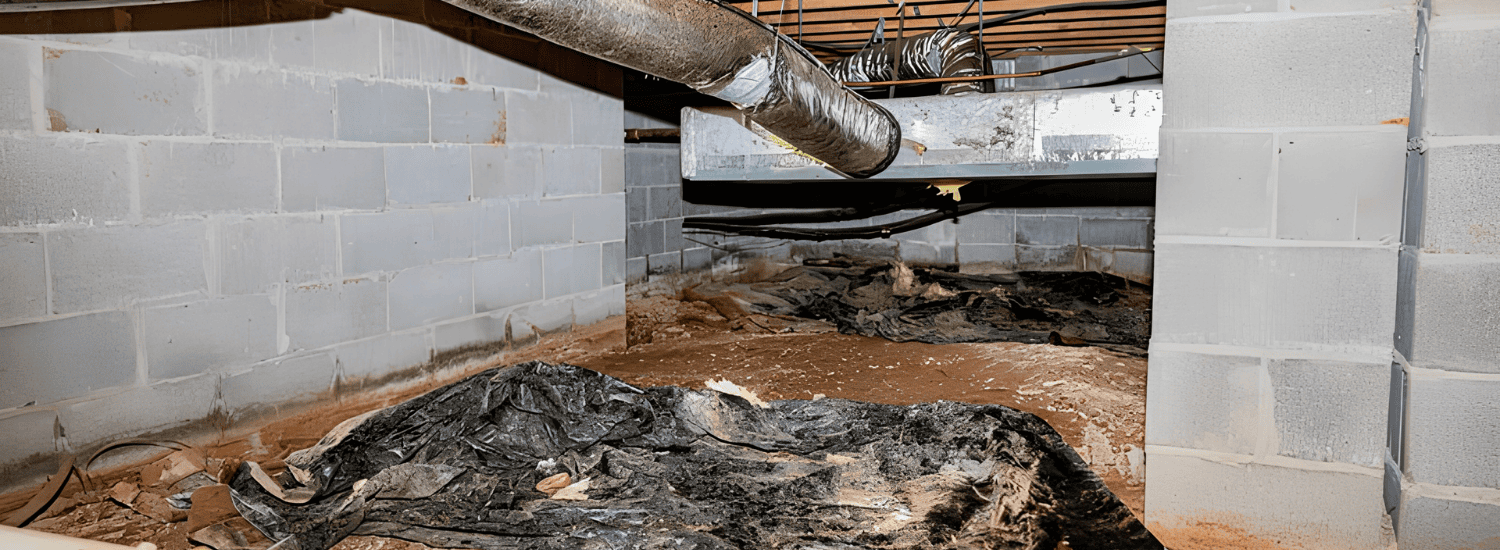
When monthly energy bills rise, homeowners often blame the thermostat, an aging air conditioner, or drafty windows. However, the source of the problem may be underneath the house.
A damp crawlspace can affect the temperature, humidity, and air quality throughout a home. Moisture may damage insulation, create condensation around HVAC ducts, and allow humid air to enter the living space. As a result, the heating and cooling system may need to run longer to maintain a comfortable indoor temperature.
This can be especially challenging in Alabama, where high humidity, heavy rainfall, and long cooling seasons place additional demand on residential HVAC systems.
Understanding how crawlspace moisture affects energy use can help homeowners identify hidden inefficiencies and determine whether crawlspace encapsulation, waterproofing, or dehumidification may improve the home’s overall performance.
A crawlspace may feel separate from the rooms above it, but it is still connected to the home.
Small openings around plumbing lines, electrical wiring, ductwork, flooring, and access doors allow air to move between the crawlspace and the living space. Warm air also naturally rises through a home, drawing air upward from lower areas.
When the crawlspace is humid, musty, or poorly sealed, some of that air may enter the rooms above it. The HVAC system must then manage not only the indoor temperature but also the additional moisture entering from below.
This connection is one reason crawlspace conditions can influence indoor comfort, air quality, and energy consumption.
High humidity can make a home feel warmer than the temperature shown on the thermostat. When the indoor air contains excess moisture, sweat evaporates more slowly, making rooms feel sticky or uncomfortable.
Homeowners may respond by lowering the thermostat several degrees. Although the home may feel temporarily cooler, the air conditioner must run longer and use more electricity.
A damp crawlspace can continuously add moisture to the home, especially when it has:
In these situations, the air conditioner may be trying to remove moisture as quickly as it enters. Addressing the source beneath the home may be more effective than repeatedly adjusting the thermostat.
Crawlspace insulation is intended to slow heat transfer between the home and the space beneath it. However, fiberglass insulation can absorb moisture and lose its shape.
Damp insulation may sag, compress, or fall from between the floor joists. Once gaps develop, outside temperatures can affect the rooms above more easily.
During an Alabama summer, hot and humid crawlspace air may contribute to warmer floors and greater cooling demand. During colder weather, missing or damaged insulation may allow heat to escape from the home.
Common signs of damaged crawlspace insulation include:
Simply replacing the insulation may not solve the problem if the crawlspace remains wet. Moisture must be controlled to help protect new or existing insulation.
Many Alabama homes have HVAC ducts running through the crawlspace. When cold air moves through the ducts during summer, their exterior surfaces may come into contact with warm, humid crawlspace air.
This temperature difference can cause condensation to form on the ductwork. Homeowners may notice water droplets, rust, wet insulation, or damp areas beneath the ducts.
Condensation can affect energy efficiency in several ways. Wet duct insulation may become less effective, allowing cooled air to warm before it reaches the rooms above. Damaged or poorly sealed ducts may also leak conditioned air into the crawlspace.
Instead of cooling the home, part of the system’s output is wasted beneath it.
Controlling crawlspace humidity can help reduce the conditions that lead to condensation. Damaged ductwork or duct insulation may also need to be evaluated separately by an HVAC professional.
An unsealed crawlspace often contains gaps around pipes, vents, wiring, access doors, and foundation openings. These gaps allow outdoor air to enter and conditioned air to escape.
Air leakage can create uneven temperatures throughout the home. One room may feel comfortable while another remains warm, cool, or humid.
The HVAC system may run longer as it attempts to compensate for these inconsistencies. Homeowners may also lower or raise the thermostat to make the least comfortable rooms feel better, increasing overall energy use.
Crawlspace encapsulation helps create a clearer boundary between the home and the outdoor environment. By sealing vents and other openings, the system may reduce uncontrolled air movement beneath the home.
An HVAC system operates most efficiently when it can maintain stable indoor conditions. A damp crawlspace may make those conditions more difficult to achieve.
The system may need to run longer because it is managing:
Longer run times generally mean greater energy use. They may also place additional wear on HVAC components over time.
Crawlspace moisture control will not fix every cause of high energy bills. Older equipment, inadequate attic insulation, air leaks around windows, and thermostat settings can also play a role. However, the crawlspace should not be overlooked when evaluating the home’s efficiency.
Alabama’s climate creates a difficult combination of heat, moisture, and frequent HVAC use.
During warm months, foundation vents may allow humid outdoor air to enter the cooler crawlspace. Moisture can then collect on pipes, ductwork, insulation, and wooden materials.
Heavy rain may also lead to damp soil or standing water beneath the home. Even after visible water disappears, the remaining moisture can keep crawlspace humidity elevated.
Homes throughout Birmingham, Homewood, Vestavia Hills, Hoover, Mountain Brook, Trussville, Pelham, and Alabaster may experience different drainage and construction issues, but the underlying pattern is often similar: excess moisture beneath the home makes indoor conditions harder to control.
Crawlspace encapsulation is designed to reduce ground moisture, outside air intrusion, and uncontrolled humidity.
A complete system may include:
The exact system should be based on how moisture is entering the crawlspace. For example, a vapor barrier may help reduce ground moisture, but it will not repair a plumbing leak or redirect rainwater collecting around the foundation.
Once active water problems are addressed, encapsulation can help create a drier and more stable environment beneath the home.
This may help protect insulation and ductwork, reduce excess humidity, and support more consistent indoor temperatures.
Crawlspace encapsulation may help improve energy efficiency, but homeowners should be cautious of guaranteed savings claims.
The effect on monthly bills depends on several factors, including:
A home with wet insulation, leaking ducts, and severe crawlspace humidity may experience a more noticeable improvement than a home with only minor moisture concerns.
The primary purpose of encapsulation is to create a healthier and more controlled crawlspace. Improved comfort and energy efficiency may be valuable additional benefits.
Higher utility costs alone do not prove that the crawlspace is responsible. However, it may be worth scheduling an inspection when rising bills occur alongside other warning signs.
These may include:
A crawlspace inspection can help identify whether moisture, insulation, drainage, or air leakage is contributing to the problem.
A damp crawlspace may increase energy costs by adding humidity to the home, damaging insulation, creating condensation, and allowing conditioned air to escape. These problems can force the HVAC system to run longer while still leaving rooms uncomfortable.
For Alabama homeowners, controlling crawlspace moisture is an important part of protecting the home and improving its overall efficiency. Depending on the source of the problem, the appropriate solution may include drainage improvements, waterproofing, a vapor barrier, crawlspace encapsulation, or a dehumidifier.
StayDry Waterproofing LLC provides free crawlspace inspections and customized moisture-control solutions throughout Birmingham, Homewood, Vestavia Hills, Hoover, Mountain Brook, Trussville, Pelham, Alabaster, and surrounding Alabama communities.
Noticing higher energy bills, humid rooms, or damaged insulation? Contact StayDry Waterproofing LLC to schedule a free crawlspace inspection and find out whether moisture beneath your home may be affecting its comfort and efficiency.
Check out our social pages for updates on what we have going on!

Stay Dry Waterproofing LLC
12500 Bedford Forrest Ln, McCalla, AL, 35111
120 19th St N Ste 208, Birmingham, AL 35203
Monday - Friday: 6:00am - 6:00pm