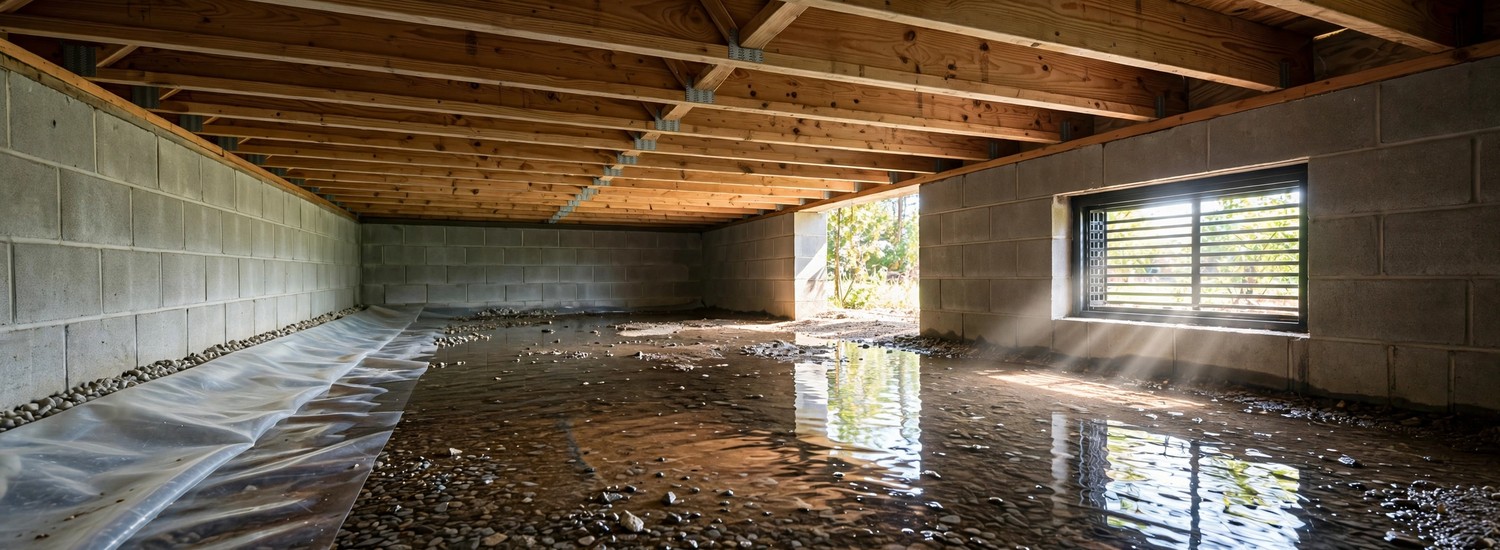
Discovering standing water beneath your home can be alarming.
The first question many homeowners ask is: Where did it come from?
There is not always one simple answer. Crawlspace water can enter from outside, rise from the ground, come from plumbing, or result from multiple moisture problems occurring at the same time.
Identifying the source is important because removing the visible water without correcting how it got there may only provide temporary relief.
1. POOR GRADING AROUND YOUR HOME
The ground around a home should generally encourage water to move away from the foundation.
If parts of the yard slope toward the house, rainwater may collect along foundation walls.
During periods of heavy rainfall, that water may eventually find its way beneath the home.
Low spots near the foundation can create similar problems.
2. GUTTERS AND DOWNSPOUTS
Your roof collects a significant amount of rainwater during a storm.
Gutters and downspouts are supposed to move that water away from the foundation.
Problems can occur when gutters are:
Downspouts can also cause problems when they discharge water directly beside the house.
Repeatedly dumping roof runoff near the foundation can contribute to saturated soil and crawlspace water intrusion.
3. GROUNDWATER
Sometimes, water comes from below rather than from the surface.
During extended periods of rainfall, groundwater levels may rise and create wet conditions beneath or around a home.
Properties with recurring groundwater problems may require a drainage system capable of collecting and removing water before it accumulates in the crawlspace.
4. PLUMBING LEAKS
Not every wet crawlspace is caused by rain.
Leaking supply lines, drains, or other plumbing components may release water beneath the home.
If water appears during otherwise dry weather, plumbing should be considered as a possible source.
5. FOUNDATION OPENINGS
Cracks, gaps, penetrations, and other openings may create pathways for water.
Homeowners may notice water stains or damp areas around specific sections of the foundation after storms.
These clues can help determine where water is entering.
HOW TO STOP WATER IN A CRAWL SPACE
Once you know where the water is coming from, the fix should target that source. There is no single product that solves every wet crawlspace, but most solutions fall into a few categories:
Because every home’s water problem is different, a professional inspection is the most reliable way to determine which combination your crawlspace needs.
WHY YOU SHOULD NOT JUST COVER THE WATER WITH PLASTIC
A vapor barrier can help reduce moisture rising from exposed soil, but it is not a drainage system.
If water regularly enters the crawlspace, simply placing plastic over the ground does not correct the source.
Water intrusion may need to be addressed through drainage improvements, waterproofing, a sump system, exterior changes, or a combination of solutions.
WHAT SHOULD YOU DO?
Pay attention to when the water appears.
Does it happen:
These patterns can provide valuable clues.
CONCLUSION
Standing water in a crawlspace is a symptom. The goal should be to determine what is causing it — and then apply the right fix to stop it for good.
Poor grading, gutter problems, groundwater, plumbing leaks, and foundation openings can all contribute to water beneath a home.
Stay Dry Waterproofing LLC provides Birmingham crawlspace waterproofing services, starting with free crawlspace inspections to help Alabama homeowners identify moisture sources and determine an appropriate solution.
Found standing water beneath your home? Contact Stay Dry Waterproofing LLC to schedule a free crawlspace inspection and find out where the water may be coming from.
Check out our social pages for updates on what we have going on!

Stay Dry Waterproofing LLC
12500 Bedford Forrest Ln, McCalla, AL, 35111
120 19th St N Ste 208, Birmingham, AL 35203
Monday - Friday: 6:00am - 6:00pm