When homeowners discover moisture beneath their house, two terms often come up: vapor barrier and crawlspace encapsulation.
Although they are sometimes used interchangeably, they do not describe the same type of moisture-control system. A vapor barrier primarily covers exposed soil to reduce moisture rising from the ground. Full crawlspace encapsulation creates a more complete sealed environment by covering the floor, extending material up the walls, closing vents, sealing gaps, and often adding humidity control.
The best option depends on how moisture is entering the crawlspace and how serious the problem has become.
For Alabama homeowners dealing with humidity, musty odors, condensation, damp insulation, or standing water, understanding the difference can make it easier to choose an effective long-term solution.
A crawlspace vapor barrier is a sheet of moisture-resistant material installed over exposed soil beneath a home.
Even when crawlspace soil looks dry, it can release water vapor into the air. That vapor may raise humidity levels and collect on wooden framing, insulation, pipes, and HVAC ductwork.
A vapor barrier creates a physical layer between the soil and the air inside the crawlspace. Its main purpose is to reduce the amount of ground moisture entering the space.
A basic installation may involve:
The thickness, durability, and installation quality can vary significantly. Some barriers are loosely placed over the ground, while more advanced systems use thicker materials with sealed seams and secure attachment points.
A properly installed vapor barrier can be useful when ground moisture is the primary concern.
It may help:
For a relatively dry crawlspace without major water intrusion or severe humidity problems, a vapor barrier may provide meaningful protection.
However, it only addresses one source of moisture. It does not automatically stop humid air from entering through open vents, seal foundation walls, remove standing water, or control remaining humidity.
Full crawlspace encapsulation is a more comprehensive moisture-control approach.
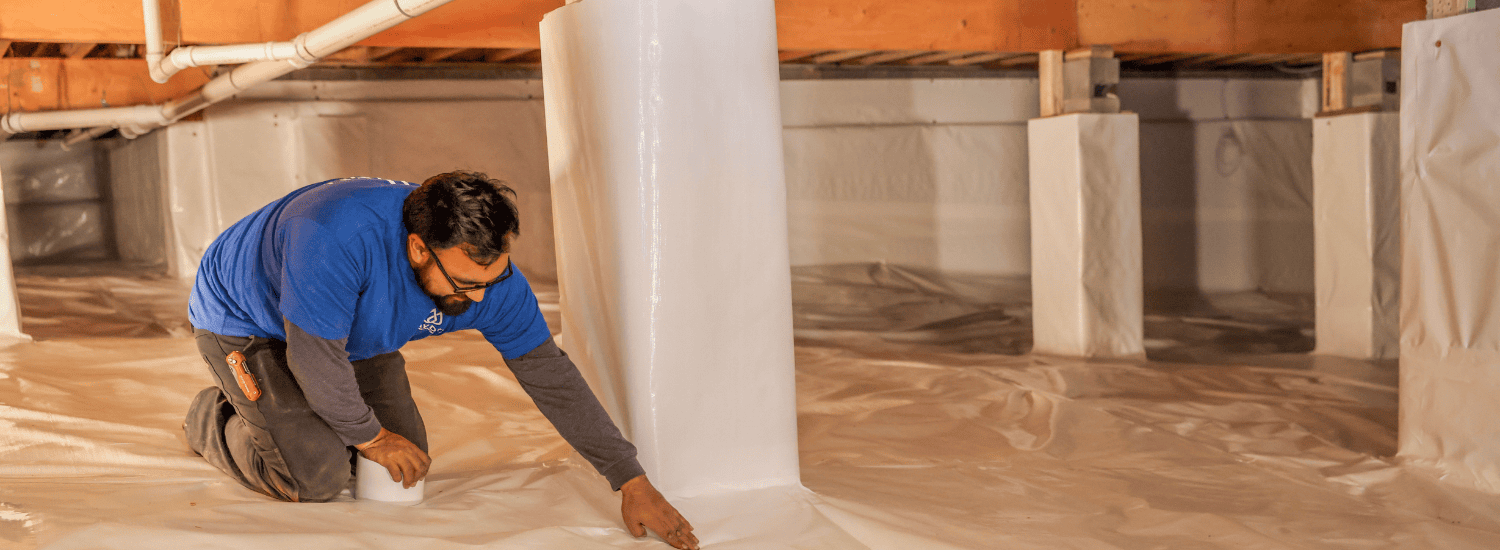
Instead of covering only the soil, the liner is typically installed across the crawlspace floor and extended up the foundation walls. It is fitted around support columns, and seams are sealed to create a more continuous barrier.
Open crawlspace vents and other gaps may also be sealed to reduce outside air intrusion.
A full encapsulation system may include:
The goal is to create a cleaner, drier, and more controlled space beneath the home rather than simply reducing moisture coming through the soil.
The simplest way to understand the difference is this:
A vapor barrier focuses mainly on ground moisture. Encapsulation focuses on the entire crawlspace environment.
A vapor barrier may reduce moisture rising from the soil, but humid outdoor air can still enter through vents, access doors, wall gaps, and foundation openings.
Full encapsulation is designed to limit both ground moisture and outside air. When paired with proper drainage and a dehumidifier, it can provide more consistent humidity control.
This distinction is especially important in Alabama, where humid summer air can create crawlspace problems even when the soil itself is not visibly wet.
Traditional crawlspaces were often built with foundation vents intended to promote airflow. In humid climates, however, that airflow can bring warm, moisture-heavy outdoor air into a cooler crawlspace.
When humid air touches cool ductwork, pipes, insulation, or wooden framing, condensation may form.
A basic vapor barrier does not stop this outdoor air from entering. The floor may be covered while the crawlspace remains humid because vents and gaps are still open.
During full encapsulation, vents are generally sealed as part of creating a controlled environment. A dehumidifier may then be used to manage any remaining moisture in the air.
No. A vapor barrier is not a drainage system.
If rainwater, groundwater, or plumbing leaks are entering the crawlspace, placing a liner over the soil does not remove the water or correct its source.
Standing water may come from:
These issues may require exterior drainage improvements, an interior drainage channel, a sump pump, plumbing repairs, or crawlspace waterproofing.
Encapsulation should not be installed over an active water problem without first addressing how the water enters and where it will go.
Not every crawlspace requires the same components, but many encapsulation systems include a dehumidifier.
After the floor, walls, vents, and gaps are sealed, a crawlspace dehumidifier can help maintain a more consistent humidity level. It removes moisture that remains in the air and helps manage small amounts of moisture entering through normal use or seasonal conditions.
A dehumidifier may be especially helpful when the crawlspace has:
Simply placing a household dehumidifier beneath the home may not be enough. Crawlspace models are designed for the temperature and humidity conditions found in these spaces and should be sized appropriately.
The answer depends on what is causing the odor.
If the smell comes primarily from damp soil, a vapor barrier may help by reducing ground moisture. However, odors may continue if the space also has high humidity, mold-like growth, wet insulation, pest activity, or water intrusion.
Full encapsulation may provide a more complete solution because it addresses multiple pathways through which moisture and odors develop.
Before either system is installed, damaged materials and active moisture sources should be evaluated. Sealing the space without correcting those issues may leave the underlying problem unresolved.
Both systems may help reduce moisture exposure, but full encapsulation generally provides broader protection.
A vapor barrier reduces moisture rising through the ground. That can help lower the amount of water vapor reaching floor joists, support beams, and subflooring.
Encapsulation also limits humid outdoor air and may include active dehumidification. This creates a more stable environment for structural wood.
Neither option can reverse existing wood rot or structural damage. Soft joists, weakened beams, or sagging floors may require repairs before or alongside the moisture-control work.
A vapor barrier may be appropriate when:
Full crawlspace encapsulation may be more appropriate when:
A professional inspection can help identify the source of the moisture and prevent homeowners from paying for a system that does not address the actual issue.
Before moving forward, homeowners should understand exactly what is included in the proposed work.
Useful questions include:
A clear proposal should explain both the visible installation and the moisture problem it is intended to solve.
Alabama crawlspaces may face several overlapping moisture sources, including humid air, exposed soil, frequent rainfall, poor drainage, plumbing leaks, and groundwater.
Because of these conditions, a loose sheet of plastic may not provide enough protection for every home. At the same time, not every property needs a full encapsulation system.
Homes throughout Birmingham, Homewood, Vestavia Hills, Hoover, Mountain Brook, Trussville, Pelham, and Alabaster may vary in age, construction, elevation, and drainage. The right solution should be based on the conditions beneath that specific home.
A crawlspace vapor barrier and full encapsulation both help manage moisture, but they provide different levels of protection.
A vapor barrier primarily reduces moisture rising through exposed soil. Full crawlspace encapsulation covers and seals more of the space, limits humid outside air, and may include drainage and dehumidification.
The best choice depends on the source of the moisture, current humidity levels, signs of water intrusion, and the condition of the home’s insulation and structural wood.
StayDry Waterproofing LLC provides free crawlspace inspections and customized moisture-control solutions throughout Birmingham and surrounding Alabama communities.
Not sure whether your home needs a vapor barrier or full encapsulation? Contact StayDry Waterproofing LLC to schedule a free crawlspace inspection and learn which option is best suited to the conditions beneath your home.
Check out our social pages for updates on what we have going on!

Stay Dry Waterproofing LLC
12500 Bedford Forrest Ln, McCalla, AL, 35111
120 19th St N Ste 208, Birmingham, AL 35203
Monday - Friday: 6:00am - 6:00pm